Coffee is more than just a beverage — for millions of people, it’s a daily ritual, a moment of comfort, and a source of joy. However, for many coffee lovers, excessive caffeine can cause unwanted side effects such as anxiety, sleep problems, acidity, or increased heart rate. This is where decaf coffee steps in as a healthier alternative.
At CoffeeTotaler, the focus is on helping people enjoy real coffee taste without compromising their health.
But a common question remains:
Is decaf coffee really good for health? And is it truly caffeine-free?
In this blog, we’ll break down everything you need to know about truly caffeine-free decaf coffee, how it’s made, its health benefits, and why Swiss Water® Process decaf coffee stands apart from regular decaf options.
What Is Decaf Coffee?
Decaf coffee is made from real coffee beans that go through a decaffeination process to remove most of the caffeine while retaining the original flavor, aroma, and nutrients of coffee.
Contrary to popular belief, decaf coffee is not fake coffee or a different plant. It starts as the same high-quality green coffee beans — the difference lies only in how caffeine is removed. Brands like CoffeeTotaler ensure that only premium-grade beans are selected before decaffeination so that taste is never compromised.
However, not all decaf coffee is created equal.
Is Decaf Coffee Completely Caffeine-Free?
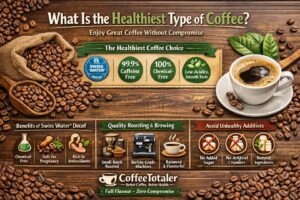
Most decaf coffees remove about 97–99% of caffeine. However, Swiss Water® Process decaf coffee goes a step further.
- Removes 99.9% of caffeine
- Contains less than 0.1% caffeine
- Verified by recognized testing bodies, including the Coffee Board of India
- Safe for people sensitive to caffeine
This makes Swiss Water decaf one of the purest and cleanest decaf options available globally, which is why it is preferred by health-focused coffee brands such as CoffeeTotaler.
How Swiss Water® Process Works (And Why It Matters)
Many people avoid decaf coffee because of concerns about chemicals. This concern is valid — some traditional decaffeination methods use chemical solvents like methylene chloride or ethyl acetate.
The Swiss Water® Process is completely different.
100% Chemical-Free Decaffeination
The Swiss Water Process uses only:
- Water
- Temperature
- Time
- Green Coffee Extract (GCE)
No chemicals. No solvents. No residues.
Flavor Is Preserved Naturally
Because caffeine is removed gently, all the original flavor compounds remain intact. This is why Swiss Water decaf offers:
- Full body
- Natural aroma
- Rich coffee taste
- Zero chemical aftertaste
Full-flavour decaf – zero taste compromise.
Health Benefits of Truly Caffeine-Free Decaf Coffee
Let’s explore why decaf coffee, especially Swiss Water decaf, is considered a healthy choice.
1. Supports Better Sleep Quality
Caffeine stays in the body for up to 6–8 hours. Even an evening cup of regular coffee can disrupt sleep cycles.
Decaf coffee allows you to:
- Enjoy coffee in the evening or at night
- Avoid insomnia and restlessness
- Improve sleep quality naturally
For people with irregular sleep patterns or stress-related sleep issues, switching to high-quality decaf coffee can be a game-changer.
2. Gentle on the Heart
Excess caffeine may increase:
- Heart rate
- Blood pressure
- Palpitations
Truly caffeine-free coffee is a safer option for:
- People with heart sensitivity
- Those managing blood pressure
- Older adults
- Anyone advised to limit caffeine intake
Decaf lets you enjoy coffee without placing unnecessary strain on your cardiovascular system.
3. Reduces Anxiety & Jitters
Caffeine stimulates the nervous system. For some people, even one cup can cause anxiety, nervousness, shakiness, or mood swings.
Decaf coffee provides the comfort and satisfaction of coffee without overstimulating the brain, making it ideal for:
- Anxiety-prone individuals
- High-stress professionals
- Students
- People sensitive to caffeine
4. Better for Digestion & Acidity
Regular coffee can trigger acid reflux, gastric irritation, and stomach discomfort.
Decaf coffee:
- Is milder on the stomach
- Causes less acid production
- Is easier to digest
Swiss Water decaf is especially gentle because it contains no chemical residues that may irritate the digestive system.
5. Rich in Antioxidants
Many people don’t realize that decaf coffee still contains antioxidants such as:
- Polyphenols
- Hydrocinnamic acids
These antioxidants help:
- Fight free radicals
- Reduce inflammation
- Support overall cellular health
You get these benefits without caffeine-related side effects.
6. Ideal for Long-Term Daily Consumption
Because decaf coffee is:
- Low in caffeine
- Chemical-free
- Easier on the body
It’s suitable for:
- Daily coffee drinkers
- Multiple cups per day
- Long-term consumption without dependency
This makes truly caffeine-free decaf coffee perfect for a health-conscious lifestyle.
Does Decaf Coffee Taste Different?
One of the biggest myths around decaf coffee is that it tastes flat or weak. This is not true for high-quality decaf.
Swiss Water Decaf Flavor Profiles
Premium decaf beans retain their origin characteristics, such as:
- Chocolatey richness
- Nutty sweetness
- Fruity acidity
- Balanced body
When brewed correctly, decaf coffee can be indistinguishable from regular coffee, especially when paired with the right brewing equipment.
Decaf Coffee & Smart Coffee Machines: A Perfect Match
Modern smart coffee machines enhance the decaf experience even further. Brands like CoffeeTotaler combine premium decaf beans with advanced automatic and semi-automatic coffee machines to deliver café-style beverages at home or in the office.
Why Smart Machines Matter
- Precise temperature control
- Consistent grind size
- One-touch brewing
- Optimal extraction
This ensures better flavor, zero guesswork, and consistent results — from espresso to cappuccino.
Who Should Choose Truly Caffeine-Free Coffee?
Decaf coffee is ideal for:
- Health-conscious individuals
- Pregnant or breastfeeding women (as advised by doctors)
- People with caffeine sensitivity
- Office professionals wanting multiple cups
- Coffee lovers who don’t want dependency
- Anyone seeking balance without sacrifice
Final Verdict: Is Decaf Coffee Good for Health?
Yes — truly caffeine-free, chemical-free decaf coffee is not only safe but beneficial.
When made using the Swiss Water® Process, decaf coffee delivers:
- Real coffee taste
- Proven health benefits
- No chemicals
- Minimal caffeine
- Complete peace of mind
This is the philosophy followed by CoffeeTotaler — making it possible to enjoy the ritual, aroma, and comfort of coffee without compromising your health.
Healthy Coffee Isn’t About Giving Up — It’s About Choosing Better
Decaf coffee isn’t a downgrade.
It’s a smarter, cleaner, and more balanced way to enjoy coffee.With the right beans and the right brewing technology, you can have it all:
Taste. Health. Convenience. Trust.
Frequently Asked Questions (FAQs)
1. Is decaf coffee good for health?
Yes. Decaf coffee is good for health when it is truly caffeine-free and chemical-free. Swiss Water® Process decaf coffee removes 99.9% of caffeine while retaining antioxidants and natural coffee flavor, making it a healthier option for daily consumption.
2. Is decaf coffee completely caffeine-free?
Decaf coffee is not 100% caffeine-free, but Swiss Water® Process decaf coffee removes 99.9% of caffeine and contains less than 0.1% caffeine. This minimal amount is considered safe even for people who are sensitive to caffeine.
3. Can I drink decaf coffee every day?
Yes. Truly caffeine-free decaf coffee can be consumed daily. It is gentle on the heart, stomach, and nervous system, allowing you to enjoy multiple cups a day without caffeine-related side effects.
4. Is Swiss Water® Process decaf better than regular decaf coffee?
Yes. Swiss Water® Process decaf coffee is 100% chemical-free and uses only water, temperature, and time to remove caffeine. Unlike chemical decaffeination methods, it leaves no solvent residue and preserves the coffee’s natural taste and aroma.
5. Does decaf coffee help with sleep problems?
Yes. Since decaf coffee contains very little caffeine, it does not interfere with sleep cycles. You can enjoy decaf coffee even in the evening without worrying about insomnia or restlessness.
6. Is decaf coffee safe for people with anxiety or heart issues?
Yes. Decaf coffee is a safer choice for people with anxiety, heart sensitivity, or high blood pressure, as it does not overstimulate the nervous system or increase heart rate like regular coffee.
7. Does decaf coffee taste weaker than regular coffee?
No. High-quality decaf coffee, especially Swiss Water® Process decaf, retains its original flavor profile. When brewed correctly, it can taste just as rich and satisfying as regular coffee.
8. Who should switch to decaf coffee?
Decaf coffee is ideal for health-conscious individuals, people sensitive to caffeine, pregnant or breastfeeding women (as advised by doctors), office professionals who drink multiple cups, and anyone looking to enjoy coffee without caffeine dependency.